
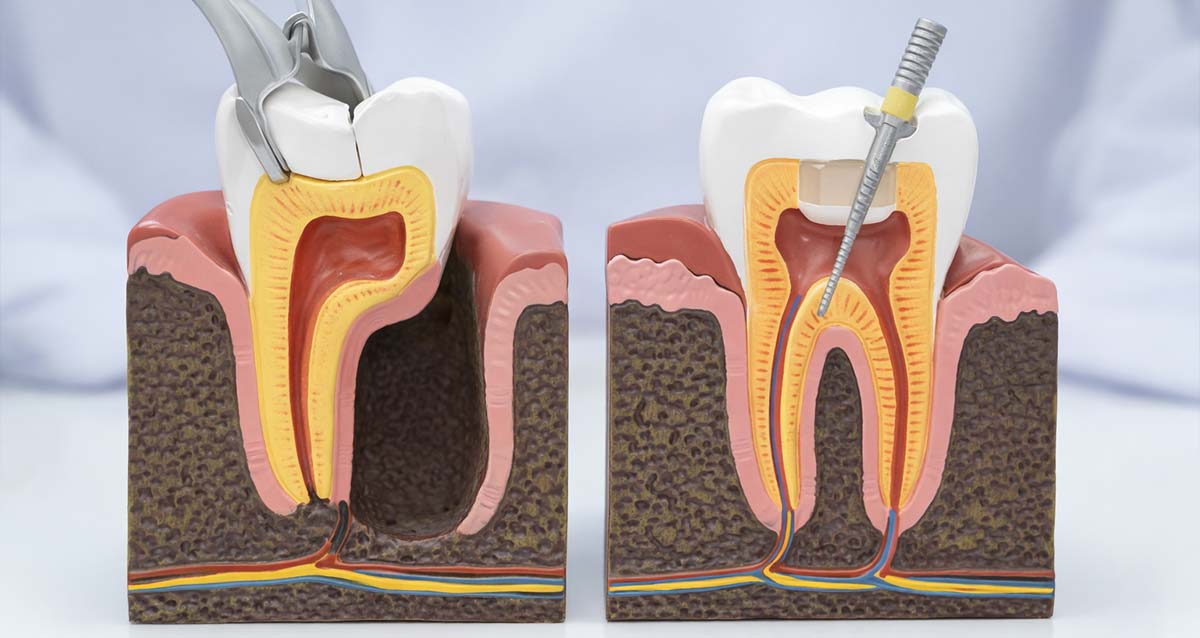
1. Preserving the Natural Tooth
Root Canal
The primary purpose of a root canal is to preserve the natural tooth structure whenever possible. One of the major root canal treatment benefits is the ability to save a damaged tooth while eliminating infection and discomfort.
Saving the natural tooth offers several important advantages:
- Maintains natural chewing function
- Preserves bite alignment
- Helps protect surrounding teeth
- Maintains jawbone stimulation
For many patients, retaining the natural tooth is the ideal long term outcome.
Extraction
Extraction removes the tooth completely, which may eventually require replacement to restore function and prevent shifting of adjacent teeth.
While extraction may sometimes be necessary, preserving healthy natural tooth structure is generally preferred when feasible.
2. Treatment Goals
Root Canal Treatment
Root canal therapy focuses on:
- Removing infection
- Relieving pain
- Preserving the tooth
- Preventing further complications
Modern dentistry often prioritises procedures that help patients save a damaged tooth whenever possible.
Tooth Extraction
Extraction focuses on:
- Eliminating severely damaged or non restorable teeth
- Removing infection sources
- Preventing spread of disease
- Creating a healthier oral environment
Both treatments address pain and infection, but through very different approaches as part of various tooth pain treatment options.
3. Recovery and Healing
Root Canal Recovery
Most patients recover relatively quickly after a root canal.
Some mild tenderness may occur for a few days, but patients are often able to return to normal activities almost immediately.
Extraction Recovery
Healing after tooth extraction generally takes longer because the body must heal the empty socket left behind.
Recovery may involve:
- Swelling
- Mild discomfort
- Dietary modifications
- Careful post operative hygiene
Additional healing time may also be required before replacement options such as implants can be considered.
4. Long Term Oral Health
Root Canal
One of the major root canal treatment benefits is that it preserves the natural tooth and surrounding bone structure.
Maintaining the natural tooth helps:
- Preserve chewing efficiency
- Maintain natural aesthetics
- Support jawbone health
- Reduce the need for additional restorative procedures
Extraction
Once a tooth is removed, the jawbone in that area may gradually begin to shrink due to lack of stimulation.
To prevent long term bone loss and shifting, tooth replacement is often recommended following extraction.
When Is a Root Canal Recommended?
A root canal may be recommended when:
- The tooth structure remains restorable
- Infection is confined within the tooth
- Bone support remains healthy
- Cracks do not extend too deeply
- Long term prognosis is favorable
In many cases, root canal therapy allows patients to preserve their natural tooth for many years.
Modern root canal procedures are highly effective and far more comfortable than many patients expect.
Signs You May Need a Root Canal
Common symptoms include:
- Persistent tooth pain
- Sensitivity to heat or cold
- Swelling around the gums
- Darkening of the tooth
- Pain when chewing
- Deep decay or infection
Early treatment is important in improving the likelihood of successfully saving a damaged tooth.
When Tooth Extraction Is Needed
Despite advances in restorative dentistry, there are situations where extraction becomes the safest and most predictable option.
Understanding when tooth extraction is needed can help patients make informed treatment decisions. Common reasons may include:
- Severe structural damage
- Extensive fractures
- Advanced gum disease
- Significant bone loss
- Failed prior restorations
- Teeth that cannot be predictably restored
In these situations, removing the tooth may help prevent ongoing pain, infection, and further complications.
Replacing an Extracted Tooth
If extraction is necessary, replacing the missing tooth is often recommended to maintain:
- Bite stability
- Function
- Appearance
- Jawbone health
Replacement options may include:
- Dental implants
- Bridges
- Partial dentures
Dental implants are frequently considered the gold standard for replacing extracted teeth because they closely mimic natural tooth roots and help preserve bone structure.
Which Option Is Better?
The answer depends entirely on the specific condition of the tooth and the patient’s overall oral health.
In general:
- Saving the natural tooth is preferred whenever possible
- Extraction may be necessary when the tooth cannot be predictably restored
A thorough examination, including digital imaging and clinical evaluation, is essential in determining the most appropriate treatment plan.
For patients in Beverly Hills, modern dental technology allows for highly accurate diagnosis and treatment planning that prioritises both long term function and aesthetics.
FAQs About Tooth Extraction vs Root Canal
Is a root canal better than extraction?
Whenever possible, preserving the natural tooth with a root canal is generally preferred because it maintains natural function and bone support.
Is root canal treatment painful?
Modern root canal procedures are typically very comfortable and performed under local anaesthesia.
When should a tooth be extracted instead of saved?
Understanding when tooth extraction is needed depends on the extent of damage. Extraction may be necessary when the tooth is too damaged, fractured, or compromised to restore predictably.
What happens if I do not replace an extracted tooth?
Missing teeth may lead to shifting, bite problems, and jawbone loss over time.
How long does a root canal treated tooth last?
With proper care and restoration, a root canal treated tooth can often last many years.
Final Thoughts
Understanding the differences between Tooth Extraction vs Root Canal treatment can help patients feel more confident when making important decisions about their oral health. While preserving the natural tooth is typically the preferred approach, extraction may sometimes be necessary to protect long term oral health and prevent further complications.
For patients exploring tooth Extraction treatment options in Beverly Hills, personalised treatment planning is essential in determining the most appropriate and predictable solution. At Dr. Bradley Lander, treatment recommendations are carefully tailored to prioritise long term oral health, comfort, function, and aesthetics.